
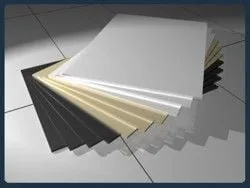
ABS Acrylonitrile Butadiene Styrene
Wear · Load · Precision machining
±0.1mm
Precision Tolerance
35+ Years
On The Gold Coast
Full Range
Perspex, HDPE & More
Australia-Wide
Fast Delivery
ABS has excellent impact resistance coupled with superior toughness and rigidity. ABS is suitable for a range of internal applications such as automotive trim panels to industrial casings, guards etc.
ABS is one of the most widely used engineering thermoplastics due to its balanced mechanical properties and ease of fabrication. It can be vacuum formed, machined, bonded, and painted, making it ideal for prototyping and production parts alike.
⚙Technical Specifications
Quick Facts
- ✓ Over 35 years experience
- ✓ No minimum order
- ✓ Fast turnaround
- ✓ Australia-wide delivery
Applications
Available Sizes
| Thickness | Sheet Size | Colours |
|---|---|---|
| 2.0mm | 1350 x 2540mm / 2440 x 1220mm | Black, White |
| 3.0mm | 1350 x 2540mm / 2440 x 1220mm | Black, White |
| 4.5mm | 1350 x 2540mm / 2440 x 1220mm | Black, White |
| 5.0mm | 1350 x 2540mm / 2440 x 1220mm | Black, White |
Finishes: Haircell, Smooth, Stipple, Sandblast & Leather grain Other colours available by special order
Fabrication & Processing
ABS is one of the easiest engineering plastics to fabricate. It machines cleanly, vacuum forms at relatively low temperatures (150–170°C), and can be bonded using solvent cements or structural adhesives. ABS can also be painted, plated, and screen printed.
ABS vs HIPS
| Property | ABS | HIPS |
|---|---|---|
| Impact Strength | Excellent | Good |
| Heat Resistance | 75°C | 70°C |
| Surface Finish | Superior | Good |
| Cost | $$ | $ |
| Vacuum Forming | Excellent | Excellent |
| Paintability | Excellent | Good |
Frequently Asked Questions
Can ABS be used outdoors?+
What adhesive should I use for ABS?+
Is ABS food safe?+
Get a Quote on ABS Acrylonitrile Butadiene Styrene
Send us your specs, drawings or rough idea — our Gold Coast workshop will reply within one business day.
Ready to Get Started?
Get a free, no-obligation quote on ABS Acrylonitrile Butadiene Styrene from single pieces to full production runs.